Cost of hard water
What Hard Water Costs in Washington
Washington tests extremely hard at 16.5 grains per gallon (grade F) - here is what that runs a home every year.
| Time period | Estimated cost |
|---|---|
| Per month | $96 |
| Per year | $1150 |
| Over 5 years | $5750 |
| Over 10 years | $11500 |
Annual figure ($1150/yr) is Jones Air & Water's verified municipal + lab-data estimate for Washington, compiled 2026 (confidence: verified). Monthly and multi-year figures are simple arithmetic projections of that one verified number - not separate estimates.
Fixing it at the source
What stopping that cost looks like
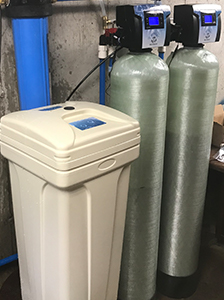
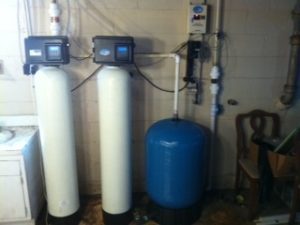
Removing the hardness before it reaches your pipes is what ends the scale damage, the energy waste, and the early appliance failures behind that number.
Questions Washington homeowners ask
Straight answers
How much does hard water cost Washington homeowners each year?+
Verified municipal and lab water-quality reports for Washington put the estimated cost of untreated extremely hard water (16.5 gpg, grade F) at about $1150 a year - scale damage, extra energy use from an overworking water heater, more soap and detergent, and shortened appliance life.
How was this number calculated?+
This figure comes from Jones Air & Water's verified municipal and lab data for Washington (confidence: verified), compiled 2026, combined with the town's hardness level. It is not a generic industry estimate - it is the field number for homes at this hardness and source profile.
Does a water softener actually pay for itself?+
Removing the hardness at the source stops the scale buildup, the energy waste, and the appliance wear that drive this number every year - which is exactly what an owner explains during your free test.
What if I'm on a private well in Washington?+
Private wells in the Franklin County / Missouri River-bottom area typically run even harder (15-25+ gpg) and far higher iron (often 1-10 mg/L, 3-33x the guideline) causing orange staining and iron-bacteria slime. Deeper bedrock wells commonly have hydrogen sulfide "rotten egg" smell, naturally elevated radium from the Cambrian-Ordovician aquifer, plus nitrate from ag land and septic systems and coliform/E. coli risk after flooding. Wells are unregulated - nobody tests them but you.